
Setting boundaries. Two words that appear in every self-help book, every therapy session, every wellness Instagram post. “Just say no.” “Protect your energy.” “Put yourself first.” The advice flows as easily as water downstream.
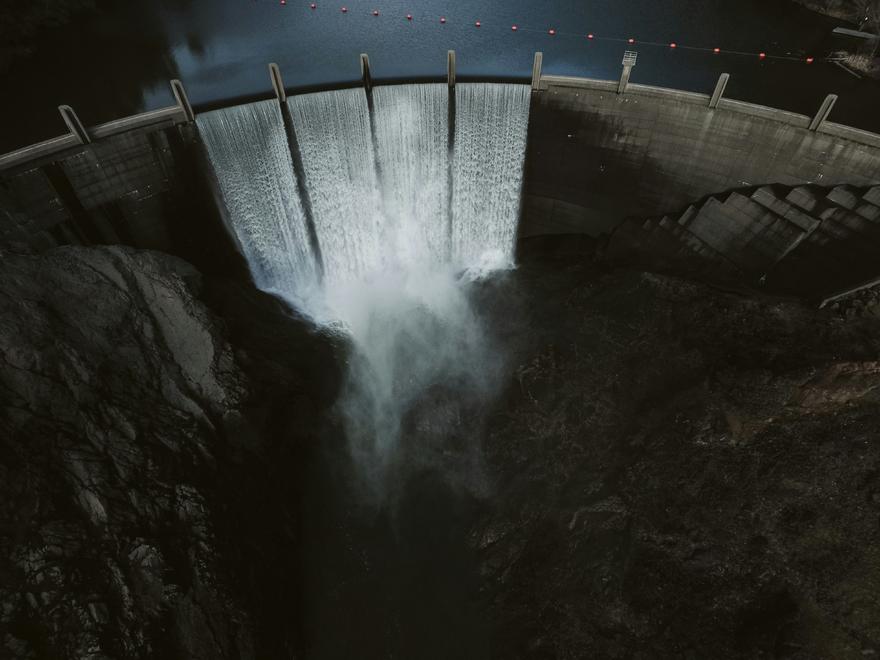
But for neurodivergent people, boundaries aren’t a gentle stream. They’re more like trying to dam a river with your bare hands while someone insists it should be simple.
The truth is, what neurotypical people experience as a straightforward path through the woods becomes, for many neurodivergent individuals, a trek through dense forest without a map. And there are specific reasons why.
When Your Body Speaks a Foreign Language: Alexithymia
Imagine trying to build a fence around your garden when you can’t quite tell where your property ends and your neighbour’s begins. That’s what setting boundaries feels like when you experience alexithymia—difficulty identifying and describing your own emotions.
Many neurodivergent people, particularly those with autism or ADHD, experience some degree of alexithymia. Your feelings exist, certainly, like underground rivers flowing beneath the surface. But accessing them, naming them, understanding what they’re telling you? That’s another matter entirely.
You might not realise you’re uncomfortable until hours after a situation has passed. You might feel a vague sense of “something’s wrong” without being able to pinpoint what crossed a line. It’s like trying to navigate by the stars when the sky is perpetually cloudy. How do you set a boundary when you can’t identify the feeling that signals you need one?
The emotional information that tells neurotypical people “this doesn’t feel right” arrives late, scrambled, or not at all. By the time you’ve translated the sensation in your chest into “I’m actually really upset about this,” the moment for setting the boundary has often passed like a season you missed entirely.
The Earthquake of Rejection: RSD
For many neurodivergent people, setting a boundary doesn’t feel like drawing a line in the sand. It feels like triggering an avalanche.
Rejection Sensitive Dysphoria (RSD) is an intense emotional response to perceived rejection or criticism, common in ADHD and other forms of neurodivergence. When you experience RSD, the possibility of someone being upset with you doesn’t register as mild discomfort. It registers as existential threat.
Think of most people’s nervous systems as sturdy oak trees that bend in the wind of social friction. An RSD-affected nervous system is more like a motion sensor, registering every tremor as a potential earthquake. Saying “I can’t do that” or “That doesn’t work for me” becomes terrifying when your brain interprets any hint of disappointment from others as catastrophic rejection.
You find yourself calculating: Is my comfort worth the risk of them being angry? Is this boundary worth potentially losing this relationship? The answer, when your nervous system is screaming danger signals, often feels like no. So you say yes when you mean no, you stay when you want to leave, you give when your well has run dry.
The Trap Inside Freedom: Demand Avoidance
Here’s a paradox that sounds impossible until you’ve lived it: sometimes the very act of setting a boundary for yourself feels like a demand you must resist.
Pathological Demand Avoidance (PDA), increasingly recognised as part of the autism spectrum, creates an internal landscape where any expectation, even self-imposed ones, can trigger an intense need to avoid. It’s like your autonomy is a wild horse that rears up at the slightest pressure of a bridle, even when you’re the one holding the reins.
You might know intellectually that you need to say no to extra work projects. But the moment you frame it as something you should do, your nervous system digs in its heels. The boundary itself becomes another demand to resist. You’re caught between the demand from outside (the request you want to refuse) and the demand from inside (that you should refuse it), frozen like a deer between two conflicting paths through the forest.
The exhausting irony is that setting boundaries, an act meant to increase autonomy, can feel like a constraint on your freedom to be flexible, to be helpful, to decide in the moment what you want to do.
The Performance of Belonging: Masking and People Pleasing
Many neurodivergent people spend their lives as social chameleons, constantly adjusting their colours to match their surroundings. This survival strategy, called masking, means monitoring and modifying your natural behaviours, speech patterns, interests, and responses to seem more “normal.”
When you’ve spent years learning that acceptance requires performance, boundaries feel like breaking character in the middle of the play.
People pleasing becomes the script you follow to avoid rejection, misunderstanding, or conflict. Your boundaries erode like a shoreline slowly claimed by the sea, so gradually you barely notice until you’re underwater. You’ve learned, through countless small interactions, that your comfort matters less than others’ ease. That your needs are the price of admission to social spaces. That being “too much” or “too difficult” means being alone.
Setting a boundary means risking the mask slipping, revealing that underneath you’re not the endlessly flexible, always-agreeable person you’ve presented. It means potentially being seen as difficult, demanding, or problematic: the very things you’ve worked so hard not to be.
Lost in Translation: Reading Social Cues
Picture trying to navigate a forest at dusk when you’re slightly face-blind to the landscape itself. You can see trees, yes, but distinguishing the subtle differences between the safe path and the one that leads to a cliff requires reading details that seem clear to others but remain frustratingly murky to you.
Many neurodivergent people struggle with reading social cues: the micro-expressions, tone variations, contextual hints, and unspoken rules that create the invisible architecture of social interaction. When you’re not entirely certain you’re correctly reading someone’s reaction, setting boundaries becomes exponentially more complicated.
Did they seem annoyed just now, or is that their normal expression? Was that tone shift because they’re hurt, or are you misreading it entirely? Is this actually a big ask or does it just feel that way to you? The uncertainty multiplies like roots beneath the surface, making every boundary-setting attempt feel like a high-stakes guess.
You might overcompensate, either avoiding boundaries entirely (safer not to risk misreading the situation) or being overly rigid with them (if you can’t read the nuance, you stick to absolute rules). Neither approach feels natural, and both leave you exhausted.
The Weight of Invisible Labour: Mental Effort
For neurodivergent people, tasks that are supposed to be simple often require the mental equivalent of pushing a boulder uphill.
Executive function differences mean that what others experience as a straightforward mental process, identify feeling, determine boundary, communicate it, becomes a complex, multi-step project requiring significant cognitive resources. And you’re often already operating with depleted resources, having spent them on navigating a world designed for differently-wired brains.
Setting a boundary might require: identifying the emotion (already difficult), finding the words to express it (language processing), anticipating the conversation (anxiety-inducing), planning what to say (executive function), actually having the conversation (social energy), and managing the emotional aftermath (emotional regulation). Each step is a clearing that must be reached before you can see the next one.
When you’re already exhausted from existing in a world full of fluorescent lights, unexpected sounds, unclear instructions, and social expectations that feel like trying to read a book in a language you’re still learning, setting boundaries can feel like a luxury you can’t afford. The mental effort required sits at the bottom of an already towering to-do list.
Tangled Roots: Codependency
When your sense of self has always been partially constructed through others’ needs and reactions, when you’ve learned to read the room before you read yourself, codependency can take root like invasive vines through a garden.
Neurodivergent people are particularly vulnerable to codependent patterns because so many factors converge: difficulty identifying your own needs, intense fear of rejection, a lifetime of learning that your value comes from being helpful or unobtrusive, and challenges with distinguishing where you end and others begin.
Your boundaries become so entangled with others’ needs that separating them feels impossible. Their problems become your emergencies. Their emotions become your weather system. You’ve become so practiced at pruning yourself to fit into others’ spaces that you’ve forgotten your own natural shape.
Setting a boundary would mean disentangling these roots, and you’re not sure what will remain standing when you do.
The Path Forward: Growing at Your Own Pace
Understanding why boundaries are difficult doesn’t make them suddenly easy, like knowing the name of a mountain doesn’t make it shorter to climb. But it does offer something valuable: self-compassion and a more realistic map of the terrain.
If you’re neurodivergent and struggling with boundaries, you’re not weak or broken. You’re navigating genuinely difficult territory with challenges that are real, not imagined. The answer isn’t to simply “try harder” or follow advice designed for differently-wired nervous systems.
Instead, it’s about finding approaches that work with your brain, not against it. Maybe that means writing boundaries down when verbal communication feels overwhelming. Maybe it means starting with tiny boundaries, seedlings before you grow forests. Maybe it means working with therapists who understand neurodivergence, or practicing boundaries with people who get it in this community.
Your boundary-setting might be messier, slower, more circuitous, a winding path rather than a straight road. And that’s okay.
Even the mightiest forest grows one season at a time, adapting to its own unique conditions. Your boundaries can grow too, at the pace and in the shape that works for your particular landscape. The goal isn’t to be perfect at boundaries. It’s to be a little bit more yourself, reclaiming small pieces of territory one careful step at a time.
We are here to help. This community, our app and our courses can all support you to develop the boundaries you want, in the way that works for you. Let us know how we can develop our support so that it works for you.









Comments