Your Journey, your way
An example of how things can unfold
Please note: You do this your way!
Everything here is a suggestion.
This is one possible way that you could start your journey to happy and healthy relationships, if having a structure is helpful for your brain.
You decide on the order.
You pick the things that work for you.
This is not a prescription. It is a menu to give you choices.
You can change and adapt it to suit you, your changing needs, and the way your brain works.
Please let us know any feedback that will help us to improve this for you!
5 Phases that will transform your relationships
PHASE 1: Foundation (Months 1-3)
Building understanding and gathering your team
What we’re doing together:
- [ ] Finding the right therapist for you and for this journey
- [ ] Using the WeTheRooted app to learning about your relationships and codependency
- [ ] Learning about how your neurodivergence intersects with relationships using the Growing Guides
- [ ] Beginning to identify your patterns using our assessments (just noticing, not changing yet)
- [ ] Starting or adjusting medication (if needed)
What this feels like:
- Relief at understanding what’s been happening
- Shame about past patterns (normal—work through this in therapy)
- Overwhelm at how much seems “wrong”
- Possibly impatient to fix everything now
Key principle: Go slow. You’re building a foundation, not fixing everything yet.
Indications of progress:
- You can identify codependent patterns when they’re happening
- You have a therapist and support system forming
PHASE 2: Early Discovery (Months 4-9)
Starting the deep work
What we’re doing together:
- [ ] Beginning trauma processing with the therapist (EMDR, somatic work, or similar)
- [ ] Trying TINY boundaries with low-stakes people
- [ ] Noticing who responds badly to your boundaries
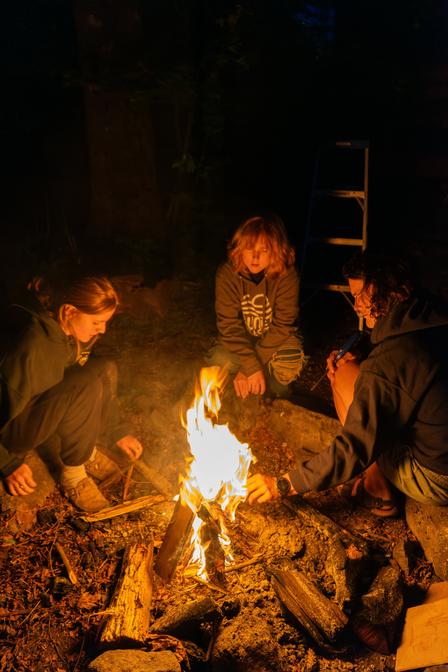
- [ ] Starting to explore using our year long, nature based reflective course: What do I actually like? What do I actually feel?
- [ ] Learning to tolerate discomfort without immediately fixing things
What this feels like:
- Hard at times
- Guilt when you set boundaries (“I’m being selfish”)
- Anxiety that people will leave
- Grief as you realize how much you’ve been giving up
- Probably some relationship conflict as you start changing
- Appreciating the efforts you are making and seeing small wins
Small boundary examples:
- “I can’t talk right now, can I call you tomorrow?”
- Letting a call go to voicemail when you’re overwhelmed
- Saying “I need to think about that” instead of automatic yes
- Leaving a social event when you’re done, not when others are
Neurodivergent accommodations:
- Write out boundary scripts ahead of time using the AI Coach in the app
- Practice in therapy before real situations
- Text/email boundaries instead of saying them verbally (this is valid!)
- Explicit permission: You’re allowed to be “rude” by neurotypical standards
Indications of progress:
- You’ve set at least a few small boundaries
- You’re learning what you actually feel/want
- You understand WHY you developed these patterns


PHASE 3: Intensive Growth (Months 10-18)
Making bigger changes
What we’re doing together:
- [ ] Deeper trauma processing work with your therapist
- [ ] Bigger boundaries with bigger consequences
- [ ] Some relationships may end—grieving these losses
- [ ] More consistent time for yourself (protected solo time)
- [ ] Carefully beginning to build new, healthier relationships
- [ ] Practicing receiving help/support (often harder than giving)
What this feels like:
- Exhausting but also liberating
- Lonelier as some relationships fall away
- Scary as old patterns break down
- Moments of “who am I if I’m not taking care of everyone?”
- Occasional backsliding (completely normal) and can get back on track
What’s happening in relationships:
- Some people will escalate their demands
- Some will respect your boundaries and relationships improve
- Some will quietly fade away
- You’re learning who was there for you vs. who was there for what you did
Identity exploration:
- Reconnecting with interests you gave up
- Trying things without performing for anyone
- Figuring out and expressing your sensory preferences
- Journal prompts: “What do I think?” “What feels good in my body?”
Indications of progress:
- Boundaries feel less terrifying (still hard, but less terrifying)
- You can tolerate some conflict without immediately fixing it
- You’re spending some time on yourself without guilt
PHASE 4: Integration (Months 18-24)
New patterns becoming more natural
What we’re doing together:
- [ ] Consolidating changes and completing the nature based course
- [ ] Boundaries getting easier (not easy, but easier)
- [ ] Developing new friendships based on reciprocity
- [ ] Stronger sense of who you are
- [ ] Therapy may taper to every other week or monthly
What this feels like:
- Still hard sometimes, but qualitatively different
- More peaceful
- Less constant anxiety about others’ reactions
- More energy (not constantly managing everyone)
- Genuine connections starting to develop
Green flags in new relationships:
- They accept “no” without guilt-tripping
- They share about themselves without you having to pull it out
- They respect your pace and needs
- They’re comfortable with appropriate distance
- You can be yourself (not performing/masking constantly)
Indications of progress:
- Some relationships have naturally shifted or ended
- You’re grieving old patterns and relationships


PHASE 5: Ongoing Maintenance (Months 25-36+)
Living differently
What we’re doing together:
- [ ] Continued therapy as needed (many do monthly or quarterly check-ins)
- [ ] Deepening healthy relationships
- [ ] Occasional slip-ups happen—addressing them quickly
- [ ] Continued identity development
- [ ] Living a fundamentally different life
What this looks like:
- Boundaries are your default, not something you white-knuckle
- Reciprocal relationships feel normal
- You can identify red flags early
- You know what you need and can usually ask for it
- Bad days happen but they’re not your whole life
Indications of progress:
- Your default isn’t “how can I help?” but “is this okay for me?”
- Life feels simpler, with less drama, and more space for the real you to live your life on your terms
How your life might change
There are lots of possible outcomes. Below is an example of how life could be different. Every person is unique and their journey is unique. This is given as an indication of what is possible.
You are calmer and more authentic in all aspects of your life.
You make sure your morning routines actually happen:
You wake up in the morning and check in with yourself first: "What do I need? How is my energy?"
If you need a quiet morning to regulate, you take this time for yourself with no guilt.
You smile as you watch your significant other sleeping:
You had no idea it would be possible to have such a loving, respectful and intimate relationship with another human being.
You hear your children wake up and you feel joy:
The sounds of them starting their day melt your heart and you take time to enjoy breakfast together.
You honour your sensory needs:
You treat your nervous system signals as valid information even when it is not ideal for others,
rather than pushing through or seeing them as character flaws to overcome.
You eat healthy things your body needs:
With no concern or restriction or binging. You love respecting what your body needs.
You have regular movement routines that support your well being:
Exercise is no longer a chore or just absent. You make time to look after yourself.
Your decision-making feels so much clearer and easier:
A friend texts asking for a favour. You notice how you feel (already overstimulated from a busy day yesterday)
and say "I can't today. I could help on Thursday."
You hold your work boundaries:
A colleague's poor planning doesn't become your emergency.
You say "I'm focused on X today" without the need to over explain.
Your finances are in order:
You understand your income, expenditure, savings, investments
and make plans for a healthy future for you and your family.
You cherish time with friends:
You are able to have deep and fulfilling friendships without getting drained,
honouring your needs while enjoying the company of others.
Conflict doesn't feel like you are being ripped apart:
When someone is disappointed with you, it's uncomfortable... and survivable.
You can sit with "They're upset AND I didn't do anything wrong" without your sense of self collapsing.
Your evening has actual downtime:
You are not squeezing in "just one more thing" for someone because you couldn't say no.
Instead there is time to stim, engage in your special interests and unmask fully because you have protected that time
as non-negotiable rather than something that only happens when you have taken care of everyone else first.
You see your place in the bigger picture of life:
Whatever your faith, spirituality or religion, you are connected with how your life impacts others,
what you can influence and what you cannot. You use your precious energy wisely.
Your internal experience is probably the biggest shift:
Maybe most importantly, there is less background noise of "Am I enough? Am I doing enough?
Are they upset with me? Did I mess up? What do they need from me?"
Your nervous system is no longer in perpetual fawn mode, scanning for threats.
There is space for your own thoughts, preferences and existence to just...be.
It is not that every day is perfect or easy. Neurodivergent life still has it's challenges. But the challenges are real challenges, rather than compounded layers of sacrificing yourself to manage everyone else's comfort.
You are finally free...
The bespoke support can be accessed for specific phases or for the whole package
Need help? Got any questions?
Get in touch and we will be happy to help you.
We also value your feedback, so let us know how we can best support you.
United Kingdom