
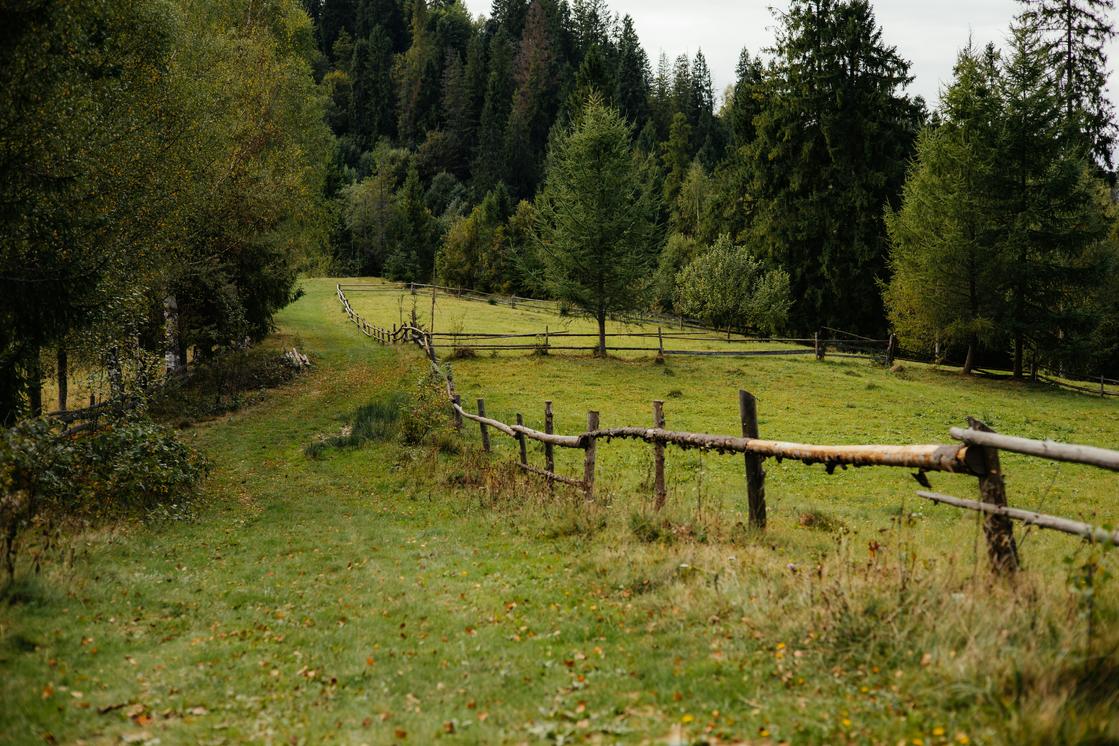
Stand at the edge of a forest and you’ll notice something remarkable: the trees don’t merge into one another. Each trunk rises distinctly from the earth, its roots spreading through soil in invisible patterns that somehow never quite tangle with its neighbours in destructive ways.
There’s space between the branches, light filtering through the canopy in dappled patterns. This isn’t accidental: it’s essential. Nature understands something we often forget: healthy growth requires clear boundaries.
So what exactly is a boundary? At its simplest, a boundary is a property line for your self.
It’s the demarcation that defines where you end and others begin: the invisible but essential border that separates your thoughts, feelings, needs, and responsibilities from those of the people around you.
Just as a riverbank contains the water’s flow without stopping its movement, your boundaries contain your identity without isolating you from connection.
Think of the cell membrane, that miraculous barrier surrounding every living cell. It’s not a wall. It allows nutrients in and waste out, protects the cell’s integrity while still allowing necessary exchanges with the environment. This is what healthy boundaries do for us: they create protection without isolation, distinction without disconnection.
When we lack clear boundaries, we’re like a garden without edges, where the soil of our selfhood gradually erodes into everyone else’s ground. We become depleted, exhausted, unable to sustain our own growth because we’re trying to nourish everyone from a limited supply.
Why Boundaries Are Necessary for a Healthy Ecosystem
Consider the natural world for a moment. Every ecosystem thrives on a delicate balance of give and take, of resources distributed according to need and capacity. A forest doesn’t demand that one tree provide shade, oxygen, and root stability for every other tree indefinitely. Each organism contributes to the whole while maintaining its own integrity. When this balance is disrupted, when one plant depletes all the nitrogen from the soil, leaving nothing for its neighbours, the entire system suffers.
This is precisely why boundaries are necessary for healthy relationships and communities. Without them, we experience emotional and psychological exhaustion.
Imagine soil that’s been farmed season after season without rest, never replenished, never allowed to lie fallow. Eventually, it becomes exhausted, unable to produce anything, no matter how much seed is planted.
What happens to people without boundaries: When we constantly give beyond our capacity, when we say yes to every request and absorb everyone’s emotions, when we take responsibility for problems that aren’t ours to solve, we deplete our internal resources.
This can look like: chronic fatigue, resentment that simmers beneath forced smiles, the feeling of being used or invisible, the loss of clarity about what you actually want or need. Like depleted soil, we become unable to support even our own growth, much less contribute meaningfully to others.
Boundaries protect the entire ecosystem of your relationships. When you’re running on empty, you can’t show up as your best self for anyone. You become reactive instead of responsive, bitter instead of generous, withdrawn instead of present. The very people you’re trying to help by ignoring your boundaries end up receiving a diminished version of you.
Nature teaches us that sustainability requires limits. A tree doesn’t grow taller than its root system can support: it would simply topple over. Rivers don’t flow beyond their capacity: they flood destructively when they do. Animals don’t give away all their food stores: they’d starve before spring. These aren’t acts of selfishness; they’re acts of wisdom, ensuring survival and continued contribution to the larger ecosystem.
The same principle applies to human relationships. When you set a boundary, when you say “I can’t take on another project right now” or “I need time alone to recharge” or “I’m not comfortable with that request”, you’re not being selfish. You’re practicing conservation. You’re ensuring that your internal ecosystem remains healthy, that your reserves of energy, compassion, and creativity can replenish naturally.
Think of the tide pools along a rocky shore. Each pool maintains its own distinct boundary while still being part of the ocean’s larger rhythm. These boundaries allow unique ecosystems to flourish in each pool, specific combinations of creatures and plants that couldn’t survive in the open ocean’s vastness. Yet twice a day, the tide rushes in, bringing fresh nutrients and carrying away waste. The boundaries don’t prevent connection; they make meaningful connection possible.
This is the beautiful paradox of boundaries: they don’t separate us from others. They allow us to meet others without losing ourselves. They create the conditions for sustainable, reciprocal relationships where both people can thrive. When you know where you end and someone else begins, you can be genuinely present with them rather than enmeshed, anxiously monitoring whether you’re doing enough or protectively shutting down to avoid depletion.
Without boundaries, relationships become parasitic rather than symbiotic. One person draws all the nutrients while the other withers. With healthy boundaries, relationships can become like the partnership between trees and mushrooms, a network of mutual support where resources flow both ways, where each organism maintains its integrity while contributing to the other’s survival.
Setting boundaries allows your soil to rest, your reserves to replenish, your roots to grow deep enough to weather storms. It’s not about building walls. It’s about knowing your edges, honouring your capacity, and trusting that when you take care of your own ecosystem, you become capable of genuine generosity rather than obligatory depletion.
In nature, nothing thrives by ignoring its limits. And neither do we. Your boundaries are not a failure of kindness. They’re the foundation of sustainable love, work, and community. They’re the recognition that you are a finite being with real needs, and that honouring those needs isn’t selfishness. It’s stewardship of the precious resource that is you.








Comments